Mains4.5Review recipe

Easy Kitchari with Rice, Lentils, and Vegetables

Prep: 10 minTotal: 40 minServings: 4 servings
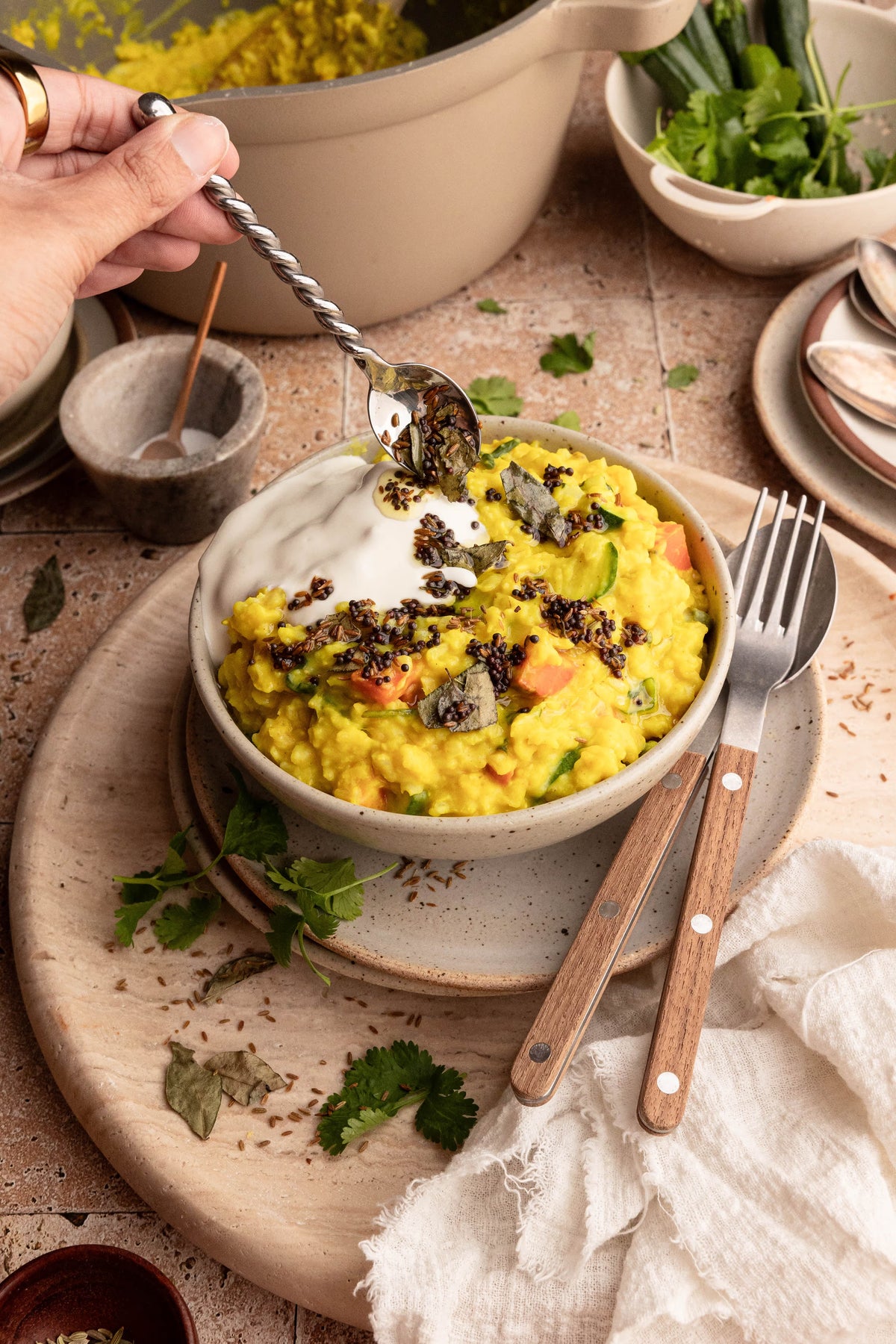
Kitchari is one of the most loved Ayurvedic comfort meals, often made when you want something simple, grounding, and easy on the body. It’s a soft, cozy one-pot dish made with rice, lentils, gentle spices, and vegetables all cooked down until creamy and nourishing. At home, when in doubt or running short of time to make a nourishing meal - Its kitchari time! In Ayurveda, kitchari is known as a balancing meal because it’s warm, soothing, and easy to digest, which makes it perfect for days when you want food to feel like a belly cuddle.
VeganGluten-FreeNut Free

Posted on July 10, 2025

Easy Kitchari – Nourishing Rice, Lentil & Vegetable Pot (The Belly Cuddle)

ingredients

Optional for Serving

instructions

  1. Drain the soaked lentils and rice into a sieve. Rinse under running water until the water runs clear.
  2. Add the rinsed lentils, rice, filtered water, and turmeric to a deep cooking pot.
  3. Bring to a gentle boil, then reduce to medium heat. Place the lid half on and cook for 15–20 minutes, stirring occasionally, until the rice and lentils begin to soften and break down.
  4. While the kitchari cooks, chop the zucchini, carrots, and spinach.
  5. Add the zucchini, carrots, spinach, and coconut milk if using to the pot. Stir well.
  6. Place the lid back on and let everything simmer for another 20–25 minutes, or until the rice and lentils are soft, mushy, and soupy. Stir occasionally so nothing sticks to the bottom.
  7. If the kitchari becomes too thick before the rice and lentils are fully cooked, add a splash more hot water.
  8. Make the spice oil. In a small pan, heat the vegan butter or coconut oil over medium heat.
  9. Add the cumin seeds, fennel seeds, and mustard seeds. Cook for a few minutes, stirring often, until the mustard seeds pop and the spices smell fragrant.
  10. Add the curry leaves, ginger, coriander powder, and garam masala. Stir for a few seconds, then remove from the heat.
  11. To serve, spoon the warm kitchari into bowls and drizzle the spice oil over the top. Add any toppings you love.
  12. Sprinkle a little love, say a little prayer, and nourish yourself.

Pressure Cooker Directions

  1. Drain the soaked lentils and rinse them well. Rinse the basmati rice separately under running water until the water runs mostly clear.
  2. Add the lentils, rice, 6 cups of filtered water, turmeric, zucchini, and carrots to the pressure cooker. Stir well, making sure nothing is stuck to the bottom.
  3. Secure the lid and cook on high pressure for 8 minutes.
  4. Allow the pressure to release naturally for 15 minutes, then carefully release any remaining pressure before opening the lid.
  5. Stir the kitchari well. The rice and lentils should be very soft and beginning to break down. Add the spinach and coconut milk, if using, and stir until the spinach wilts.
  6. For a thinner, soupier consistency, gradually stir in an additional ½–1½ cups of hot water until the kitchari reaches your preferred texture.
  7. Set the pressure cooker to sauté on low and cook uncovered for 3–5 minutes, stirring occasionally. Season with salt to taste, if desired.
  8. Meanwhile, make the spice oil. Heat the vegan butter or coconut oil in a small pan over medium heat.
  9. Add the cumin seeds, fennel seeds, and mustard seeds. Cook for 1–2 minutes, stirring often, until the mustard seeds begin to pop and the spices smell fragrant.
  10. Add the curry leaves carefully, as they may splutter. Stir in the ginger, coriander powder, and garam masala. Cook for another 20–30 seconds, then remove from the heat.
  11. Spoon the warm kitchari into bowls and drizzle the spice oil over the top. Finish with any toppings you love.
  12. Sprinkle a little love, say a little prayer, and nourish yourself.

notes

  • Soaking the moong lentils helps them cook down more easily and gives the kitchari a softer texture.
  • Kitchari is meant to be soft, creamy, and a little soupy, not dry like pilaf.
  • If it thickens as it sits, add hot water and stir until it loosens.
  • Coconut milk is optional, but it makes the texture creamier and softer.
  • For extra greens, add more spinach at the end and let it wilt into the hot kitchari.
  • From an Ayurvedic perspective, kitchari is known as a gentle, grounding meal, especially when you want something simple and comforting.
  • Store leftovers in an airtight container in the fridge for up to 3 days. Reheat gently with extra water to bring it back to a soft, soupy texture.
  • Pressure cookers vary slightly. If the rice and lentils are not completely soft, add a little more hot water and cook using the sauté setting until they reach a creamy, porridge-like consistency.
  • Avoid adding the coconut milk before pressure cooking, as thicker liquids can sometimes catch on the bottom and trigger a burn warning.
  • Dietary note — Vegan: if using vegan butter or coconut oil

The Eat in Club Members Reviews

Cooked This? Tell Us

worth making again
taste & flavor

MK

“Great and easy recipe! Thanks Radhi”

taste & flavor 5.0
worth making again 5.0